Writing Markdown documentation AI agents can actually use
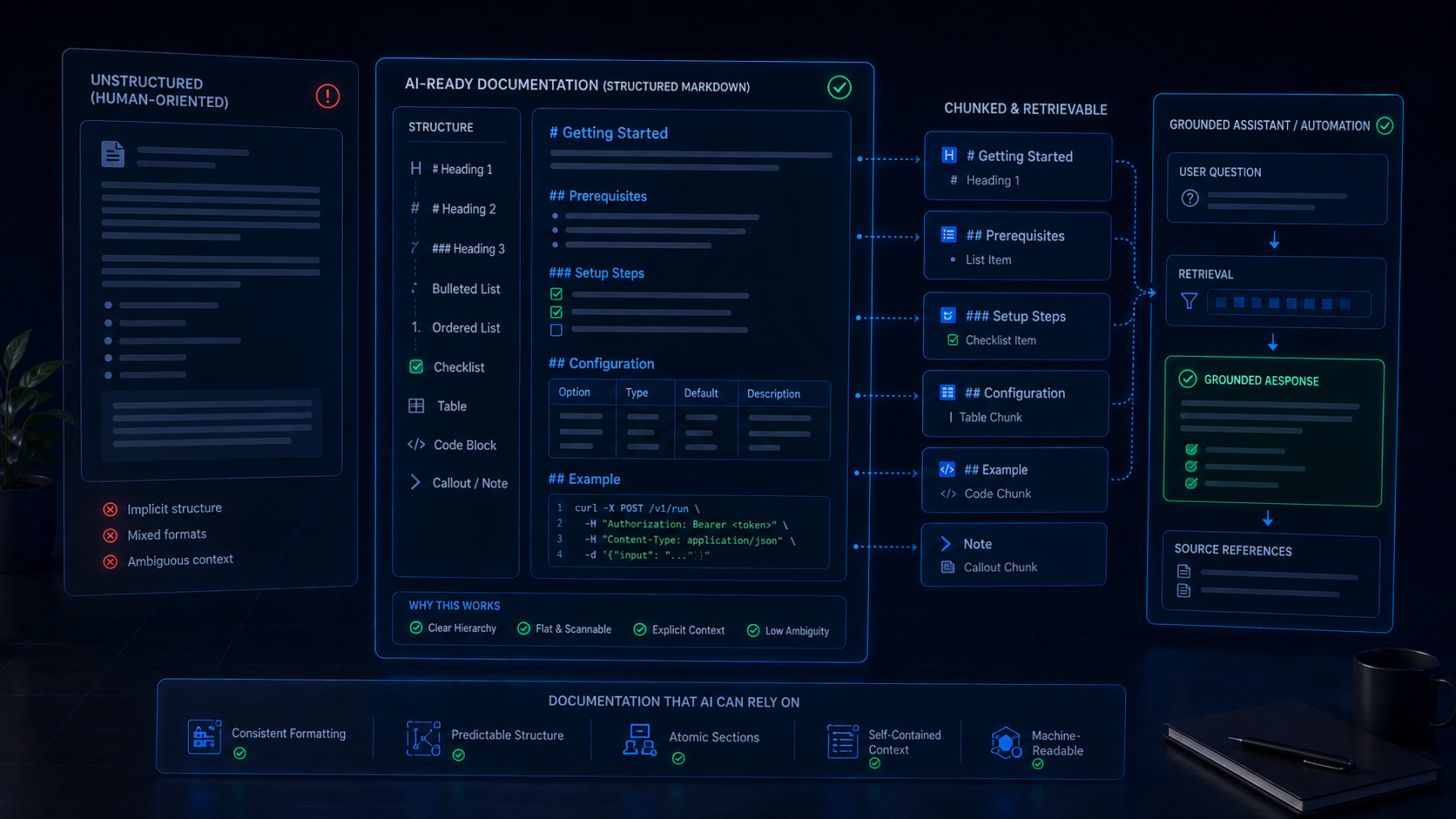
"AI-ready documentation" sounds like a tooling problem. It is a formatting problem.
"AI-ready documentation" sounds like a tooling problem. It is a formatting problem.

"AI champion" sounds like an HR title that does not really exist. In small businesses, it gets dismissed as something only enterprises bother to assign.
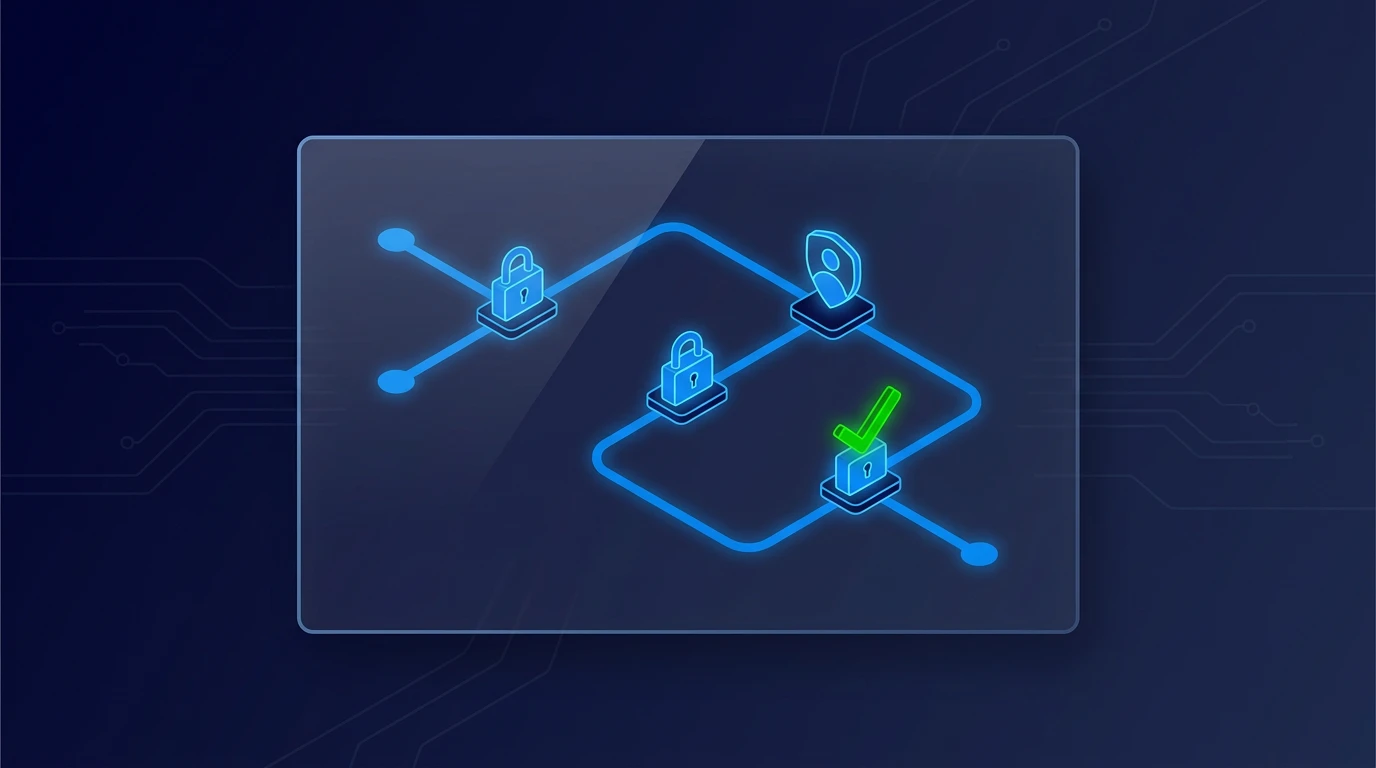
Most of what gets called "AI automation" is a single prompt and a reply. That is a chatbot. A real pipeline has structure: discrete steps, quality checks, and a human at the end before anything ships.

The first two posts in this series covered the problem — your knowledge is scattered and AI can only work with what you give it — and the fix — structured, clean documents give AI dramatically better signal to work from.

Once you understand that AI can only work with what you give it, the next question is obvious: what is the best way to give it?
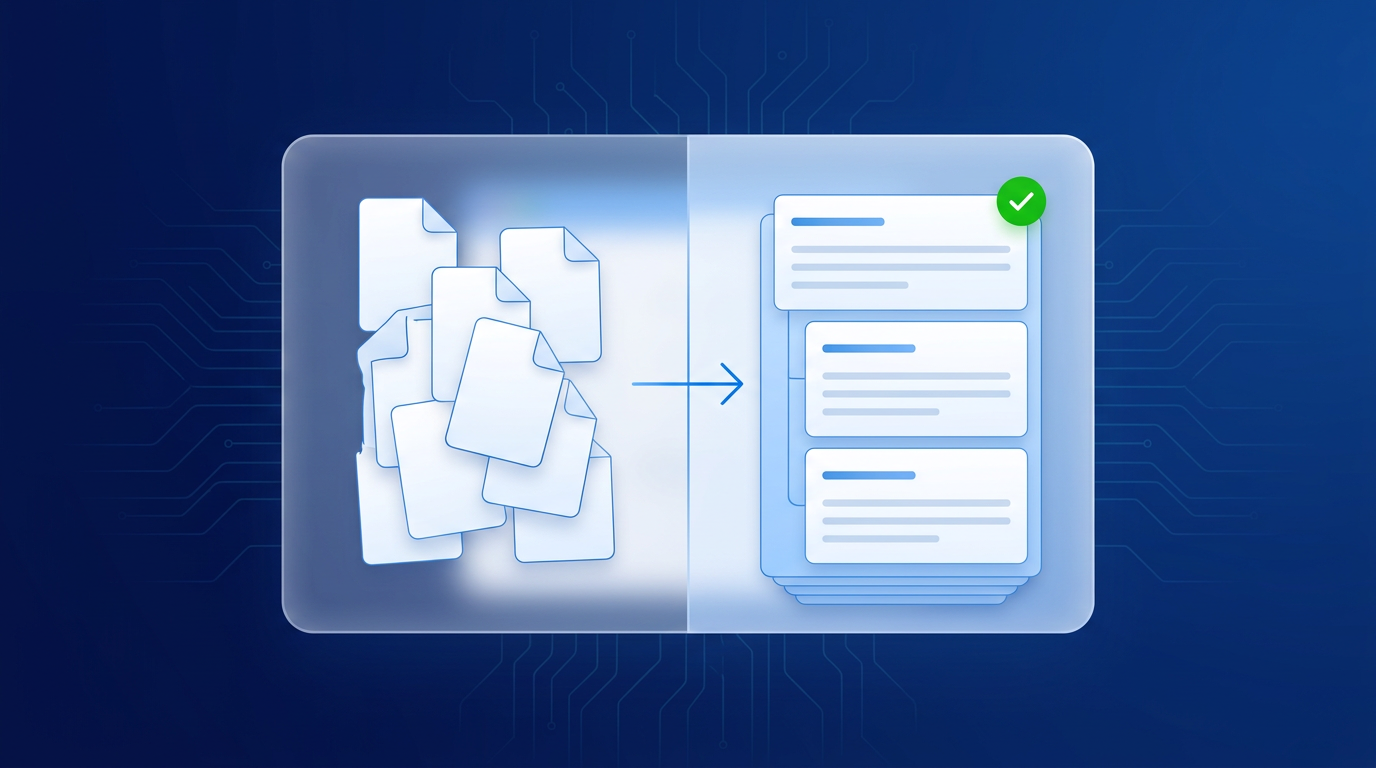
AI tools are capable. Most businesses that try them get inconsistent results anyway — not because the tools are broken, but because the tools have never been given the right information to work with.

"Governed AI" is a phrase showing up more often in vendor marketing, enterprise strategy documents, and industry articles. For small businesses, it tends to land as either jargon to ignore or a concept that sounds like it requires a compliance department.

Email is one of the highest-friction parts of running a small business. It is also one of the most practical places to introduce AI — not to fully automate your inbox, but to reduce the time you spend sorting, categorizing, and drafting responses.

One of the fastest ways to get inconsistent AI results across a team is to have every person write their own prompts from scratch each time. One of the fastest ways to fix that is a shared prompt library.

Most small businesses that are not using AI are not avoiding it because of cost or complexity. They are avoiding it because of things they believe about AI that are not accurate. Clearing those up is usually the fastest path forward.