From SOP to automation: the smallest workflow worth shipping this week
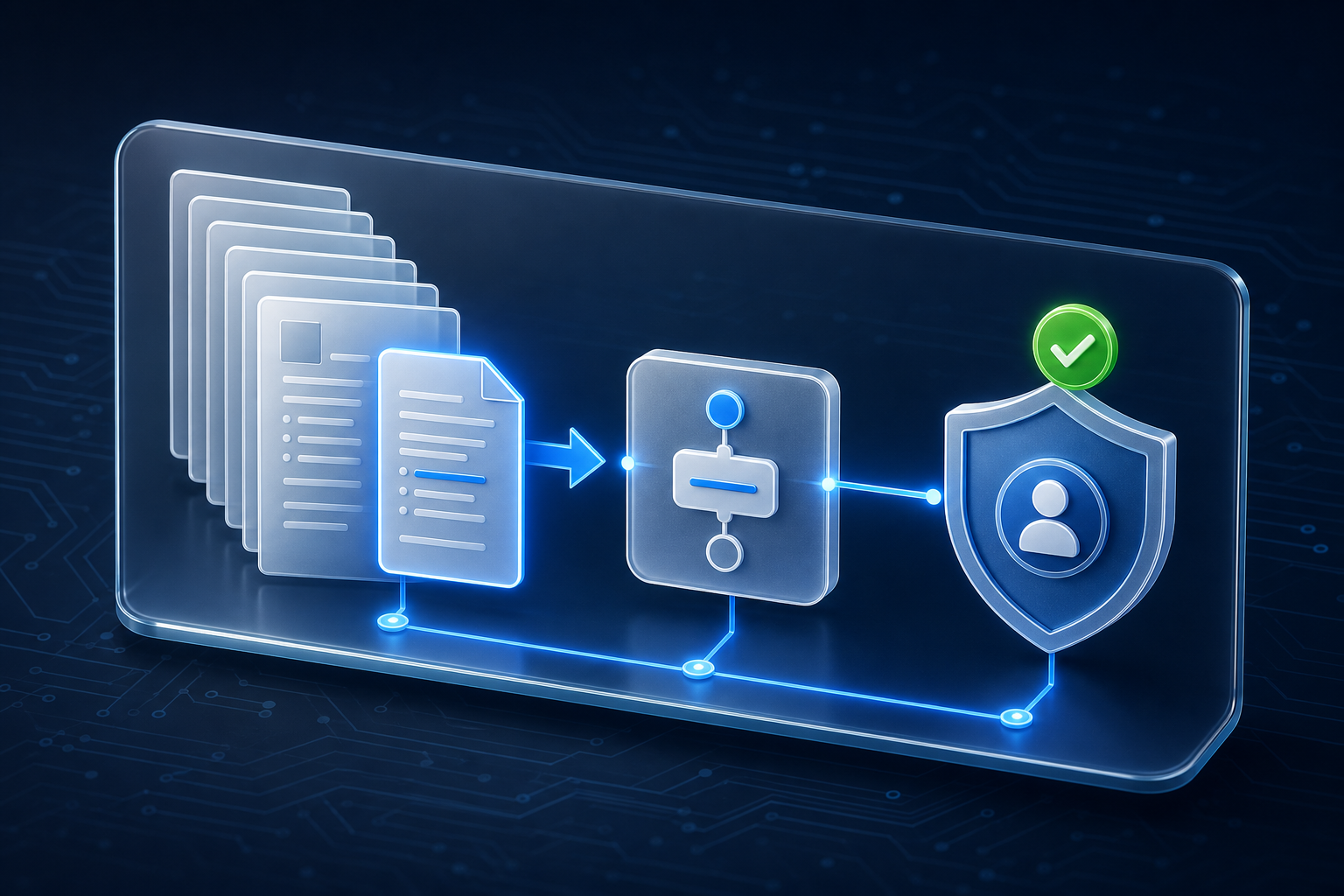
Most teams stall at the same place. They have written the procedure, but the procedure still runs on a person.
A documented SOP is not an automation. It is a script waiting for someone to execute it by hand, every time. The gap between the two is smaller than it looks, and the way to close it is not to pick your hardest workflow. It is to pick your smallest one and finish it this week.
Why your shortest SOP is the best place to start
The first automation you ship matters more for confidence than for hours saved. You want a win you can point to by Friday.
Short procedures win because they leave less room to fail. Look through your documented SOPs and pick the one with the fewest steps, the fewest decisions, and the most predictable input. A three-step procedure that runs twice a day beats a fifteen-step one that runs once a month.
Skip anything that needs judgment, touches money without review, or changes often. Those come later, once you trust the pattern.
Cut the workflow down to one trigger and one outcome
A shippable automation has one clear start and one clear end. If your SOP branches, you are looking at several automations, not one.
Name the trigger in a single sentence. "When a form is submitted." "When an invoice lands in the shared inbox." Then name the outcome the same way. "A record is created in the tracker." "A draft reply is queued for review."
Everything between those two points is the workflow. If you cannot state the trigger and outcome in two short sentences, the workflow is still too big. Cut it down until you can.
A five-day plan to ship it
You do not need a quarter. You need five working days and one owner.
- Day 1: Rewrite the chosen SOP so each step is explicit, with no "use your judgment" gaps.
- Day 2: Build the trigger and the first action. Nothing else.
- Day 3: Connect the remaining steps to reach the outcome.
- Day 4: Run it on real input with a person watching every result.
- Day 5: Fix what broke, then let it run live with the checkpoint in place.
If a step takes longer than its day, the workflow was too big. Go back and cut.
Put a human checkpoint on the first runs
Automation-first does not mean unattended on day one. It means the default is to run without a person, once you have earned that.
For the first two weeks, route every output to a person before it takes effect. They approve, reject, or correct. You are not checking whether the tool works. You are checking whether it does the right thing on the inputs you did not anticipate.
When the checkpoint stops catching errors, you remove it. Until then, it stays.
Measure one number, then pick the next workflow
Pick a single number before you start. Minutes saved per run. Errors caught. Tickets closed without a human touch.
Track that one number for two weeks. If it moves, you have proof, and you pick the next smallest SOP. If it does not, you learned which workflow was not worth automating, for the cost of one week.
The point is not to automate everything. The point is to finish one thing, see the result, and decide what comes next from evidence instead of hope.
Keep exploring
If you are not sure which procedure to start with, the AI Readiness Audit maps your workflows and ranks them by effort and payoff, or you can contact FIT directly. You might also find How to Identify Your First Automation useful for choosing the candidate.