Why AI Doesn't Know Your Business Yet
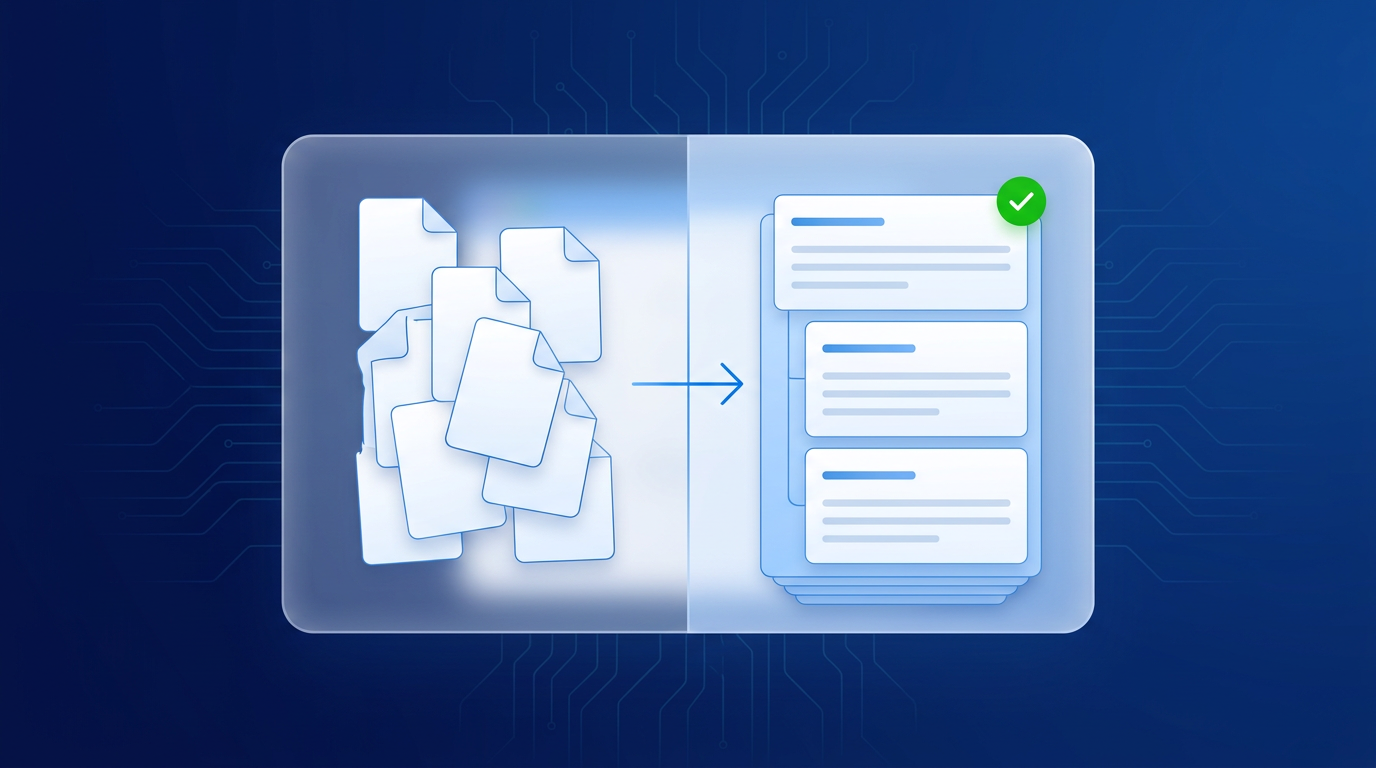
AI tools are capable. Most businesses that try them get inconsistent results anyway — not because the tools are broken, but because the tools have never been given the right information to work with.
AI That Knows Your Business
Why AI Doesn't Know Your Business Yet (you are here) · How to Give AI the Context It Needs · What Changes When AI Actually Knows Your Business
The gap is not capability
When you ask an AI assistant to help write a proposal, draft a client update, or answer a process question, it can only work with what you give it in that moment. It has no memory of your last project. It does not know how your team handles exceptions. It does not know what your standard pricing logic is, or what you always say in the first client meeting.
The result is a generic answer. Useful as a starting point, but requiring significant editing to reflect how your business actually works.
That editing overhead is the gap. And it is not the AI's fault.
Where your knowledge actually lives
Most small businesses have real, hard-won knowledge. It exists — but rarely in one place, and rarely in a form that is easy to retrieve.
It lives in email threads that answer the same question five different ways depending on who wrote the reply. In a proposal from two years ago that is "basically still the template." In the head of the person who has been there the longest. In a checklist someone made once and saved in a folder nobody else knows about.
When that knowledge is needed, someone has to go find it — or reconstruct it from scratch. When AI is involved, it cannot do either. It works with what is in front of it.
What happens when you ask AI without giving it context
Ask AI to help draft a service agreement without giving it your terms, and it produces a generic one. Ask it to help onboard a new team member without giving it your process, and it describes a process that has nothing to do with how you actually operate.
This leads to a common frustration: "AI just gives me generic stuff." The real cause is almost always the same — the AI has not been given your specific information to work from.
SMB example: residential property management company
A property management company with six staff used AI to help draft tenant communications. Results were inconsistent. Some drafts were close to usable. Others needed heavy rewriting because they referenced policies the company did not have, used language that did not match the company's tone, or left out important steps.
The issue was not the AI tool. It was that each person was starting from scratch with no shared context. The AI had no idea what this particular company's policies, terms, or communication standards were.
The knowledge existed. It was just scattered across old emails, a shared drive folder nobody had cleaned up in two years, and the office manager's memory.
The problem is solvable — but not automatically
Better tools will not close this gap on their own. Adding a new AI subscription does not give it access to your institutional knowledge. Neither does connecting it to your email or calendar.
What actually closes the gap is organizing your most important business knowledge into a form that AI can reliably use. That is not a technical project. It does not require a developer or a new platform. It starts with identifying what your team uses most often and making sure that information is clear, current, and findable.
The next post in this series covers what that actually looks like — specifically, why the format of your documents matters more than most people expect.
Keep exploring
Continue with How to Give AI the Context It Needs or read Tribal Knowledge to Shared Knowledge for a broader look at the cost of siloed information. To map what knowledge your team actually relies on, start the AI Readiness Audit or contact FIT.