Part 2: Production Hardening - Logging, Retries, Fallbacks, Kill Switches
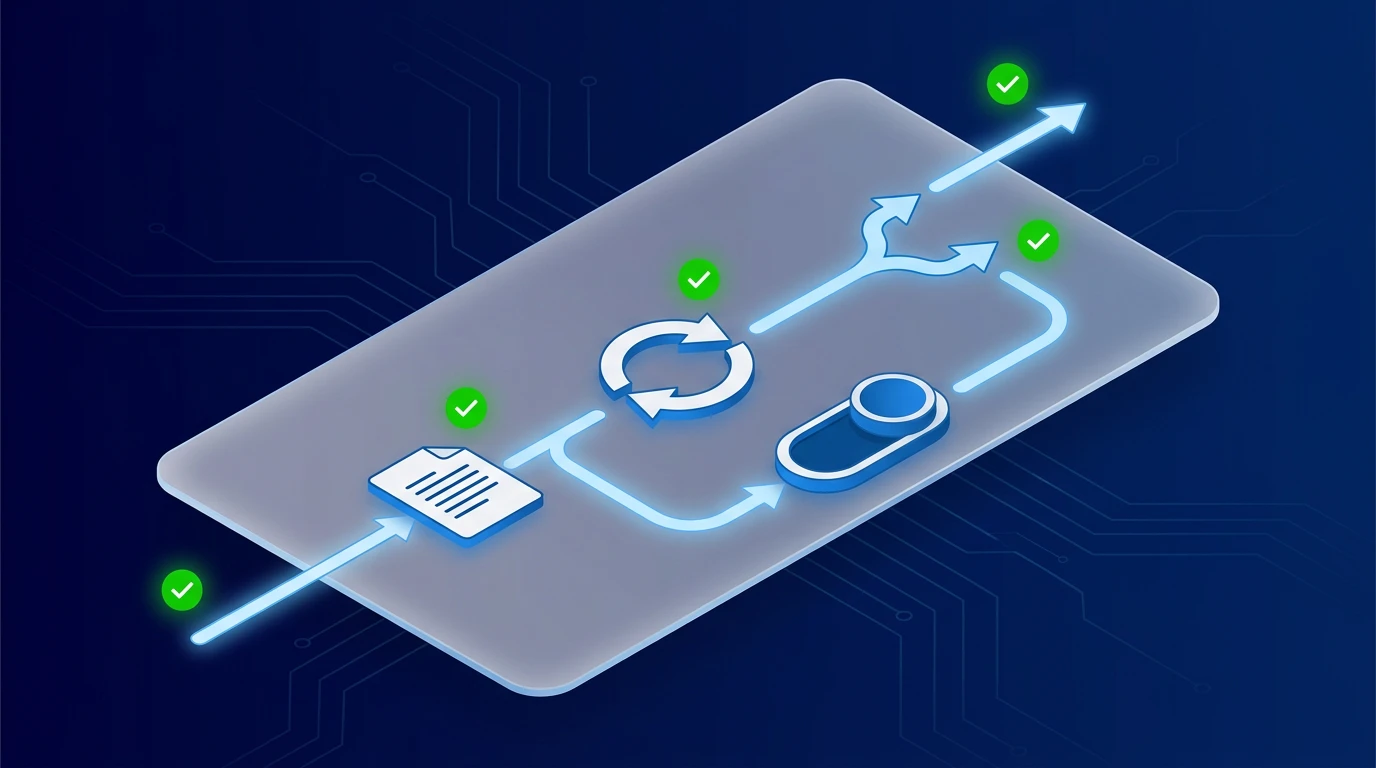
Pilots break in production for one reason: they are optimized for demo success, not operational reliability. Hardening closes that gap.
From Pilot to Production: Shipping AI That Doesn't Break
Part 2 of 3 · Series hub · Part 1: Pilot Scope · Part 2: Production Hardening (you are here) · Part 3: Adoption + Handoff
A working automation is not automatically a safe automation. Production readiness means your team can detect issues, recover fast, and stop harm when needed.
What changes between pilot and production
In pilot mode, humans often watch every step. In production, volume increases and attention drops. If your system fails silently, small errors become expensive.
Production hardening means adding controls around behavior, not just improving output quality.
Logging that explains decisions
You need logs that answer three questions fast:
- What happened?
- Why did it happen?
- Who needs to act now?
For each automated run, record input summary, decision path, confidence or rule match, and final action taken.
Retries that do not duplicate damage
Retries are useful only if they are safe.
Use these defaults:
- retry only transient failures (timeouts, temporary API errors)
- cap retry count and wait between attempts
- make write actions idempotent when possible
If a failed step can trigger a payment, a send, or an account change twice, fix idempotency before enabling retries.
Fallback paths for controlled continuity
Fallbacks keep operations moving when AI confidence drops or dependencies fail.
Common fallback patterns:
- route to manual review queue
- switch to template-based response
- pause high-risk branch and continue low-risk steps
Fallbacks should preserve service quality without masking underlying issues.
Kill switches and escalation ownership
Every production automation needs a stop condition.
Define in advance:
- who can disable the workflow
- what threshold triggers a stop
- who communicates impact to stakeholders
- how restart approval is granted
A kill switch is not panic. It is disciplined control.
SMB example: customer inquiry routing
A team automated classification and routing of support tickets. During peak volume, misclassification rose above threshold.
Because they had control rules, they switched to fallback routing and manual review within minutes. SLA impact stayed limited and root cause analysis was completed the same day.
SMB example: invoicing reminders
An automation sent reminders after due dates. A provider outage caused retries to stack.
With idempotency and capped retries, the system avoided duplicate sends and defaulted to a safe queue until services recovered.
Keep exploring
Continue to Part 3: Adoption + Handoff, or revisit Part 1: Pilot Scope. For a production-ready control plan, start the AI Readiness Audit or contact FIT.