RAG in Plain English: How AI Finds Answers in Your Business Files
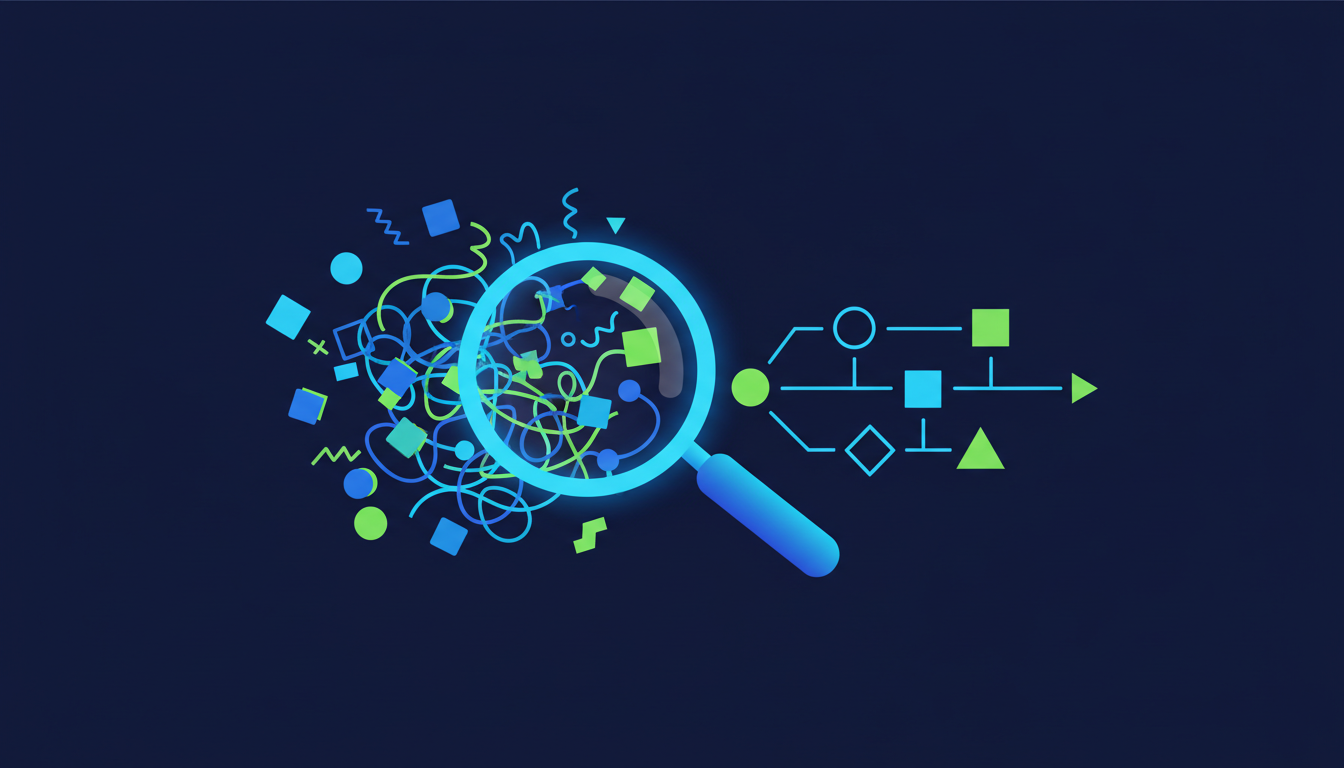
RAG — Retrieval-Augmented Generation — is how AI finds accurate answers in your own documents instead of guessing from general training. Here's what it means and why it matters for your business.
Most AI tools are trained on broad, general knowledge. They're useful for a lot of things, but they don't know your SOPs, your pricing, your client history, or how your team actually operates. RAG is the mechanism that changes that.
The librarian and the writer
The clearest way to understand RAG is with an analogy. Imagine you need a report written on a specific topic. You have two options: hire a writer who works purely from memory, or hire a writer who also has access to a librarian — someone who can pull exactly the right source material before the writing begins.
A standard AI model is the writer working from memory. RAG adds the librarian.
Before generating a response, a RAG system searches your documents, finds the most relevant passages, and hands them to the AI as context. The AI then writes its answer based on what your documents actually say — not what it was trained on months or years ago.
The problem RAG solves
Standard AI models have two limitations that matter for business use. First, they have a knowledge cutoff — they don't know anything that happened after their training ended. Second, and more importantly for most SMBs, they don't know anything specific to your business at all.
Ask a general AI about your refund policy and it will either guess or decline to answer. Connect that same AI to your documentation via RAG and it finds the right policy, pulls the relevant section, and gives your team or your customers an accurate answer in seconds.
How it works in three steps
Index. Your documents — SOPs, policies, product guides, past proposals, whatever you feed it — are broken into chunks and stored in a way the system can search quickly. This is usually a vector database, but you don't need to understand the mechanics. Think of it as a smart filing system.
Retrieve. When someone asks a question, the system searches the index for the chunks most relevant to that question. Not keyword matching — semantic matching, meaning it understands intent, not just words.
Generate. The AI receives the retrieved chunks alongside the original question and writes a response grounded in that specific material. The answer cites your content, not general knowledge.
What RAG is not
RAG is not magic, and it's worth being clear about what it won't do. It won't fix bad source documents — if your SOPs are inconsistent or outdated, the AI will surface that inconsistency. It won't make decisions for you. And it won't replace the need for someone to own and maintain the knowledge it draws from.
RAG is a retrieval and synthesis tool. The quality of what it retrieves determines the quality of what it generates.
Everyday SMB examples
The use cases that consistently deliver the most value for small businesses:
- Internal Q&A — staff ask questions about policies, procedures, or product details and get instant, sourced answers instead of tracking someone down
- Client-facing support — a chatbot that answers customer questions based on your actual documentation, not generic AI responses
- Onboarding — new team members can query everything they need to know without waiting for availability from a busy colleague
- Proposal and content support — writers and sales people surface past work, pricing logic, and positioning from a single query
What you need to get started
A working RAG setup for an SMB doesn't require a large IT project. What it does require:
- A defined set of documents you want the system to draw from
- Someone who owns keeping those documents current
- A clear scope — what questions should this system answer, and for whom?
- A way to evaluate whether the answers are accurate
The last point is the one most teams skip. If you don't test and validate the outputs regularly, you won't know when something goes wrong — and something will always eventually go wrong.
The one-line summary
RAG lets AI answer questions about your business the way your best-informed team member would — by looking up the right information before speaking.
Keep exploring
This post is part of a series on knowledge management. Read Tribal Knowledge to Shared Knowledge and Why AI Knowledge Bases Fail Without Structure, or browse all posts →.