What Small Businesses Get Wrong About Automation
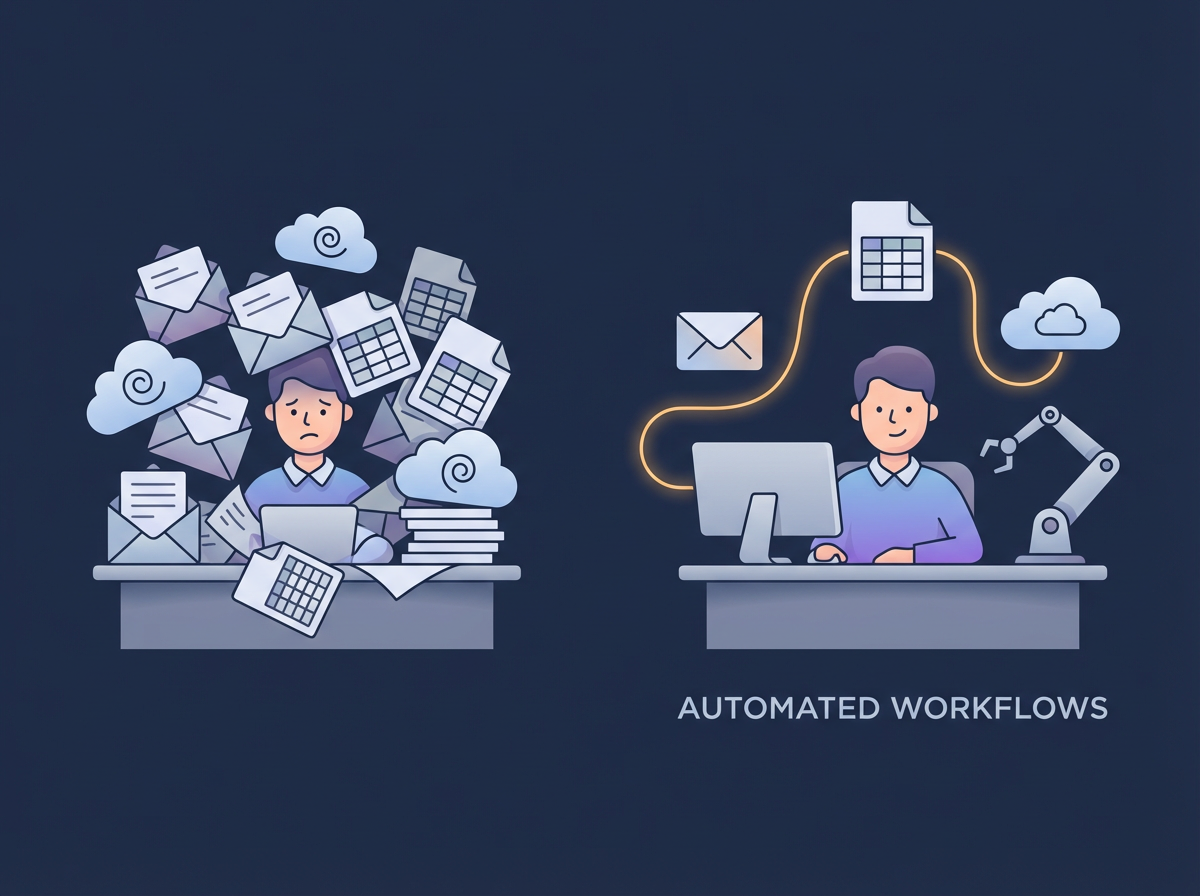
Automation isn't complicated, expensive, or just for big companies. Here are the three most common misconceptions holding small businesses back — and why they're wrong.
Every small business owner has heard the buzz around automation — but few feel confident about it. Some think it's too technical. Some think it's too expensive. Most think it's meant for bigger companies with bigger teams and bigger budgets.
Here's the truth: small businesses often stand to gain the most from automation, and the biggest obstacles are usually misunderstandings, not technology. Here are the three we see most often.
Misconception 1: "Automation is complicated — I don't have time to figure it out"
Most people picture coding, servers, IT projects, or major system overhauls. In reality, today's tools are simple, visual, and built for non-technical users. Automations can be as straightforward as "when this email arrives, do this" or "when a form is filled, update this sheet." You don't need to overhaul your business — you just need to remove the repetitive tasks slowing you down. Small automations often take minutes to build and save hours every week.
Misconception 2: "We're too small for automation — we just do things manually"
Manual work feels manageable until it isn't. Re-typing data, forwarding emails, tracking updates in spreadsheets — these bottlenecks grow quietly, and suddenly one person becomes the whole system holding everything together.
Automation isn't about size — it's about removing friction. If a task is repetitive, predictable, and rule-based, it can usually be automated no matter how small the business. Even very small teams regularly save 10–20 hours a month with just one or two simple workflows.
Misconception 3: "Automation replaces people — and that's not what we want"
Small businesses rarely automate to replace staff. They automate to reduce busywork, prevent mistakes, free people to focus on customers, avoid burnout, and speed up operations. Automation isn't about removing humans — it's about supporting them, giving your team more time for the work that actually matters.
The real problem isn't automation — it's the assumptions around it
Small businesses don't struggle because automation is hard. They struggle because it's unfamiliar. Once you see how simple and practical modern tools can be, the hesitation disappears — and the benefits show up fast. The businesses that thrive are the ones that remove friction early.
Keep exploring
Read How to Identify Your First Automation for a practical framework to get started, or browse all posts.