AI-readable documentation pays off twice: once for your team, once for your AI
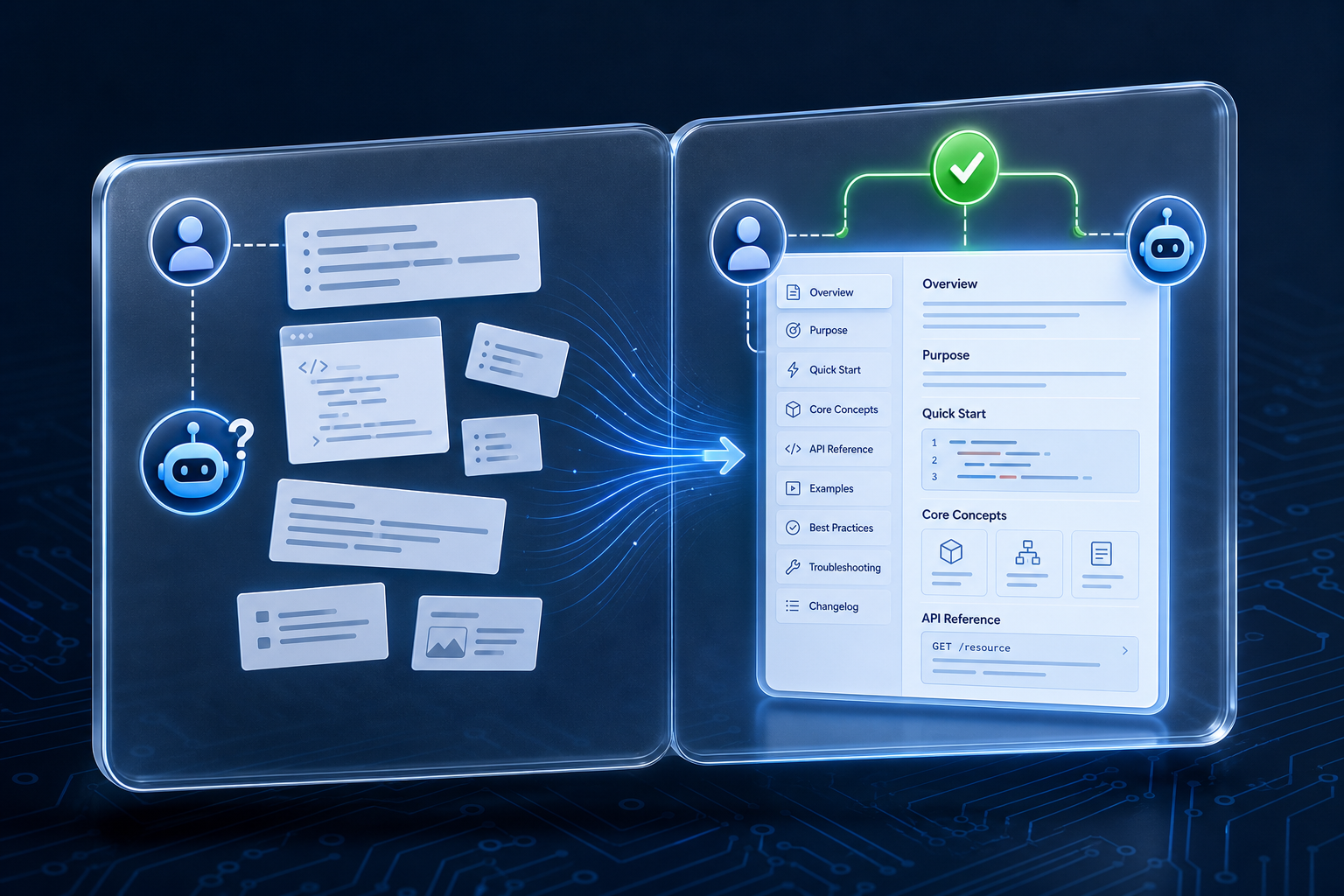
Your team can read a messy document and still get it right. They fill the gaps from memory. An AI tool cannot. It only has the words on the page.
That gap is where most AI projects quietly underperform. The model is fine. The documentation feeding it is not.
The docs that work for your team can still fail your AI
People read documentation like a map. They skim, skip the familiar, and infer the rest.
AI tools do not infer your business. They read what is written, exactly as written.
So a document that "everyone understands" can still produce wrong AI output. The understanding lives in your team's heads, not on the page. When the AI reads it, that shared context is missing.
You do not see the problem until you point a tool at the doc and the answer comes back wrong.
What an AI-opaque document looks like
An AI-opaque document hides its meaning in formatting and habit. Common signs:
- Important rules buried mid-paragraph instead of stated plainly.
- "Usually" and "in most cases" with no written exception.
- Headings used for visual weight, not actual structure.
- One file covering three unrelated topics.
- Steps described as a story rather than a list.
Each of these is fine for a colleague who can ask a follow-up question. The AI cannot ask. It guesses, and the guess becomes your output.
The same content, made AI-readable
AI-readable does not mean technical. It means structured and explicit.
Take a refund policy written as a dense paragraph: "We usually offer refunds within thirty days, though it depends on the situation and the account manager's call."
Rewrite it as a rule with its exception:
- Refunds: within 30 days of purchase.
- Exception: enterprise accounts require account manager approval.
Same policy. Now the AI returns the rule, not a feeling. So does a new hire on day one.
Why the fix that helps AI also helps your team
This is the part owners miss. You are not building separate documentation for the AI.
Clear headings, one topic per file, rules with written exceptions. Those make a doc easier for a person to use and easier for a tool to parse. The same investment returns twice.
I've sat with operators who assumed "AI-ready docs" meant a new system and a new budget line. It almost never does. It means writing down what the team already knows in a form that does not require a follow-up question.
A 22-person property management firm I worked with had their tenant onboarding scattered across email threads and one long Word file. New staff took six weeks to get fluent. We restructured it into short, single-topic docs with explicit steps. Onboarding dropped to two weeks, and the AI assistant they later added answered tenant questions correctly without heavy editing. One rewrite, two returns.
A small, consistent investment beats a big rewrite
You do not need to rewrite everything. Start with the documents your team pulls up most.
Pick three. Restructure them this month. Test each one against an AI tool and a new hire.
Consistency matters more than volume. Ten clean docs in a shared pattern beat a hundred inconsistent ones. The pattern is what both your team and your tools learn to rely on.
Improvisation is expensive. Written-down structure is cheap.
Keep exploring
If you want to know which of your documents are worth restructuring first, the AI Readiness Audit is the fastest way to find out, or contact FIT to talk it through. You might also find How to Give AI the Context It Needs useful.