Prompt vs. procedure: turning one-off AI requests into repeatable team workflows
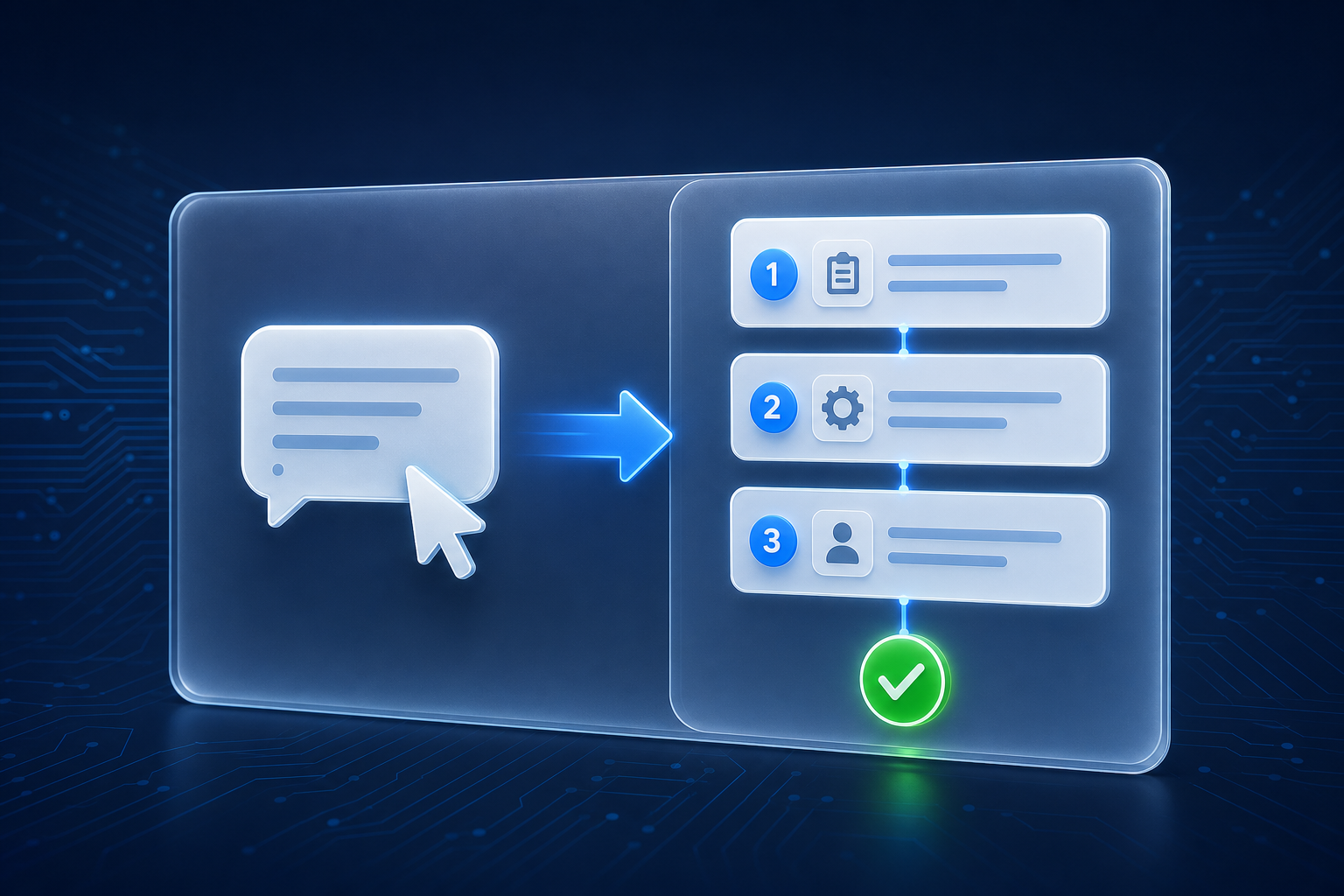
A clever prompt produces one good answer. A procedure produces the same good answer every week, run by anyone on your team.
Most people treat every AI interaction as a one-off. They type a request, get a useful result, then start from scratch the next day. The result was good, but nothing about it was repeatable. Durable results come from encoding the prompt into a documented procedure your team can follow without you.
Why a good prompt isn't a system
A prompt lives in one person's chat history. When that person is out, the knowledge leaves with them. The next attempt depends on memory, mood, and whoever happens to be typing.
A system does not depend on any of that. It runs the same way regardless of who presses the button. A prompt is a moment; a procedure is an asset.
The real difference between a prompt and a procedure
A prompt is the words you send to the AI. A procedure is everything around those words: the input, the steps, the checks, and the owner. The prompt is one ingredient in a recipe, not the whole meal.
The difference shows up in consistency. One person prompting freehand might summarise a report in four different ways across a month. A documented procedure produces the same structure, length, and tone every time. That consistency is what makes the output trustworthy.
Worked example: documenting your weekly report summary
Say someone on your team summarises a weekly sales report into a short update for the leadership channel. Today it lives in their head. Here is how to turn it into a procedure.
Write down four things. The trigger: report lands in the shared drive every Monday by 9am. The input: the latest sales export. The exact prompt, saved word for word. The check: confirm the three headline numbers match the source before posting.
That is the whole conversion. You took a task one person does from memory and made it a step anyone can run. The prompt becomes one line in a procedure, not the entire procedure.
What to write down so anyone on the team can run it
Keep the runbook short and specific. A new hire should be able to follow it on their first week without asking questions.
- The trigger that starts the task and who owns it.
- The exact input and where it lives.
- The full prompt text, copied verbatim.
- The check that confirms the output is correct before it goes out.
No vague steps, no missing inputs, no undocumented prompt. If a step needs judgement, name who makes the call.
Keeping the procedure accurate as your work changes
A procedure drifts when the work changes and the document does not. The report format shifts, the prompt stops fitting, and quality slips quietly.
Give every procedure an owner and a review date. When the input or the goal changes, update the prompt and the check the same day. A procedure nobody maintains becomes a procedure nobody trusts.
Keep exploring
If you want to find which recurring AI tasks are worth turning into procedures first, start the AI Readiness Audit or contact FIT.